
Why We Let Kids Climb Trees: The Power of Managed Risk
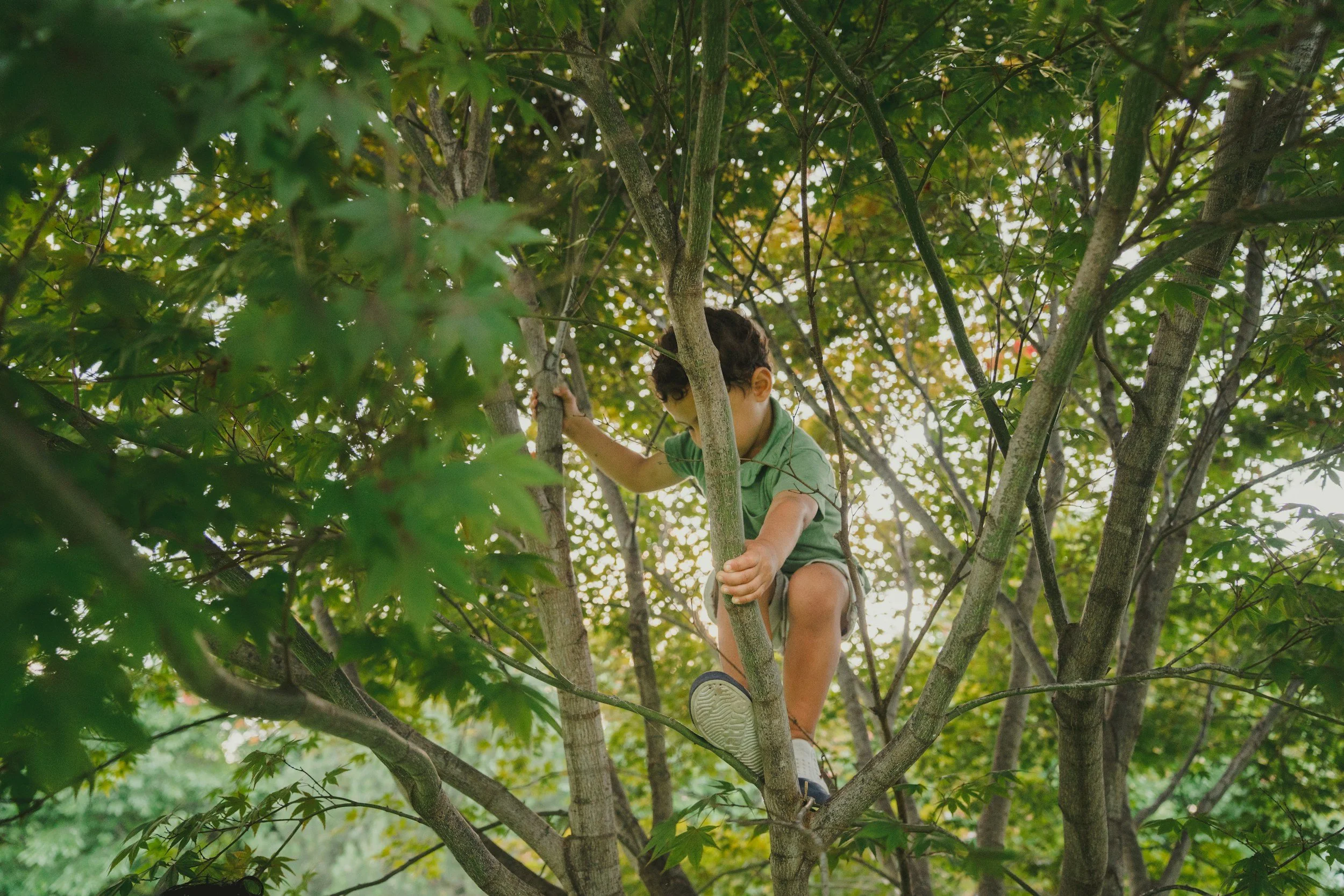
In a world that often feels increasingly "bubble-wrapped," it can be startling for a parent to see their child six feet up a Coastal Live Oak or balancing on a fallen sycamore log. With their nature school teachers, these moments aren’t accidents or lapses in supervision—they are essential learning opportunities.
What is Risky Play?
Risky play isn't about being reckless; it’s about managed challenge. It involves activities that provide a thrill, such as navigating heights, experiencing speed, or using real tools. While the modern instinct is to tell kids to, "Be careful!" or "Get down!", we take a different approach. We ask questions like, "What is your plan for your next move?" or "How does that branch feel under your foot?" This shifts the responsibility of safety from the adult to the child.
The Benefits of Reaching Higher
When a child decides to scramble up a boulder or climb a tree, they are engaging in a complex series of cognitive and physical tasks. They are using and improving their balance and proprioception. Navigating uneven surfaces helps children experience and understand where their body is in space and builds core stability. They are using judgement to assess which branches can hold their weight, and if they are comfortable with what they’re doing. In making these constant decisions, they develop a sense of their own safety, which will serve them throughout their lives. In planning their route up, and more importantly back down, they are employing executive function, which requires intense focus, working memory, and mental flexibility. Finally, reaching high points can bring a mix of fear and excitement. Learning to navigate and manage the “scary-fun” feeling builds a foundation of emotional resilience in a healthy way that will help them as they make decisions regarding risk and thrill later on in their childhoods, teenage years, and so on.
Building Resilience for Life
We believe that by allowing children to face these small, manageable risks now, we are preparing them for the larger risks of adulthood. A child who has navigated a steep ravine or mastered a high climb has strengthened their belief in their own capabilities. They learn that they can face a challenge, feel a bit nervous, and come out the other side successful.
Our Role as Educators
Our instructors are trained to be active observers. Without hovering, we are always present to facilitate the experience. We ensure the environment is appropriate for the child's age and ability, spotting them when necessary, and helping them cultivate a deep, lifelong confidence in their own physical and mental strength.